Businesses risk paying consulting rates forever for routine work if they don’t plan for internal staff to take over after consultants leave.

Outsourcing IT management consulting without a plan to train and involve your own staff leads to ongoing reliance on consultants for routine decisions. This dependence means paying consulting rates indefinitely for work your team could handle.
IT management consulting gets sold as the fix for whatever's slowing your systems down, but what actually plays out once consultants are in the building doesn't always match that pitch. The gap between the promise and the practice is worth understanding before you sign anything.
The process usually starts reasonably enough — outside experts come in, look at your systems, recommend fixes, sometimes run the operation for a stretch. When your team's stretched thin or missing a particular skill, that can look like a fast, sensible move.
The trouble is in how these engagements get structured over time. When consultants keep making the routine calls with no real plan for your own people to take those calls over, your business can end up leaning on them for decisions that shouldn't need outside help at all.
Instead of your team getting sharper, you're the one dialing the consulting firm every time something small goes sideways.
That habit has a cost that compounds. A business that keeps going back to consultants for everyday needs usually ends up paying more than it expected to, and the everyday tasks are exactly the ones that add up fastest.
The real risk isn't the invoice for the original project — it's the ongoing dependence that keeps you paying consulting rates for work your own staff could be doing.
So if you want your IT operations management to actually hold up for the business over the long run, it's worth deciding early how much control you're comfortable keeping in-house. A plan made at the start beats a habit that forms by accident.

Consultants usually come in to solve something urgent — a system that's aged out, a problem that needs fixing fast — and they're generally good at spotting the issue and putting something in place quickly. Without a clear point where responsibility hands back to your team, though, that role has a way of quietly growing past the original job.
Part of that is just human nature. Whoever's already the expert on the account becomes the person your team calls with the next question too, and then the one after that. It stops being a project and starts being how things work around there — your staff's confidence never gets a chance to build because the outside person is always the one making the call.
Once that pattern sets in, it's hard to reverse. Every routine decision that gets handed off is a decision your staff didn't get to practice, and the longer that goes on, the harder the handoff back becomes. Eventually even the small stuff runs through the consulting firm, and you're paying their rate for it.
Consulting services get judged on speed, and fair enough — but the way they operate also shapes how your own people relate to their own systems. When a consultant is running the show, staff can start to hang back, unsure whether they're allowed to touch something or worried about undoing whatever the consultant set up.
That hesitation opens a gap between your team and the technology they're supposed to know. People stop asking questions or floating fixes because it doesn't feel like their call to make anymore, and that internal knowledge just erodes over time. Whatever way the consultant does things becomes the default, whether or not it actually fits how your business runs.
Keeping your team engaged means keeping them in the room for every step — giving them a say, having them shadow the work, building toward a real handoff instead of leaving it open-ended. Skip that, and your internal IT culture goes passive, which makes bringing operations back under your own roof that much harder later.
IT management consulting can look like a smart move for a business in Arkansas trying to get its technology in shape, and in plenty of ways it can be. But the sticker price on the original project isn't the whole cost — once consultants stay involved in the routine decisions, you're paying their rate for work your own people could be doing.
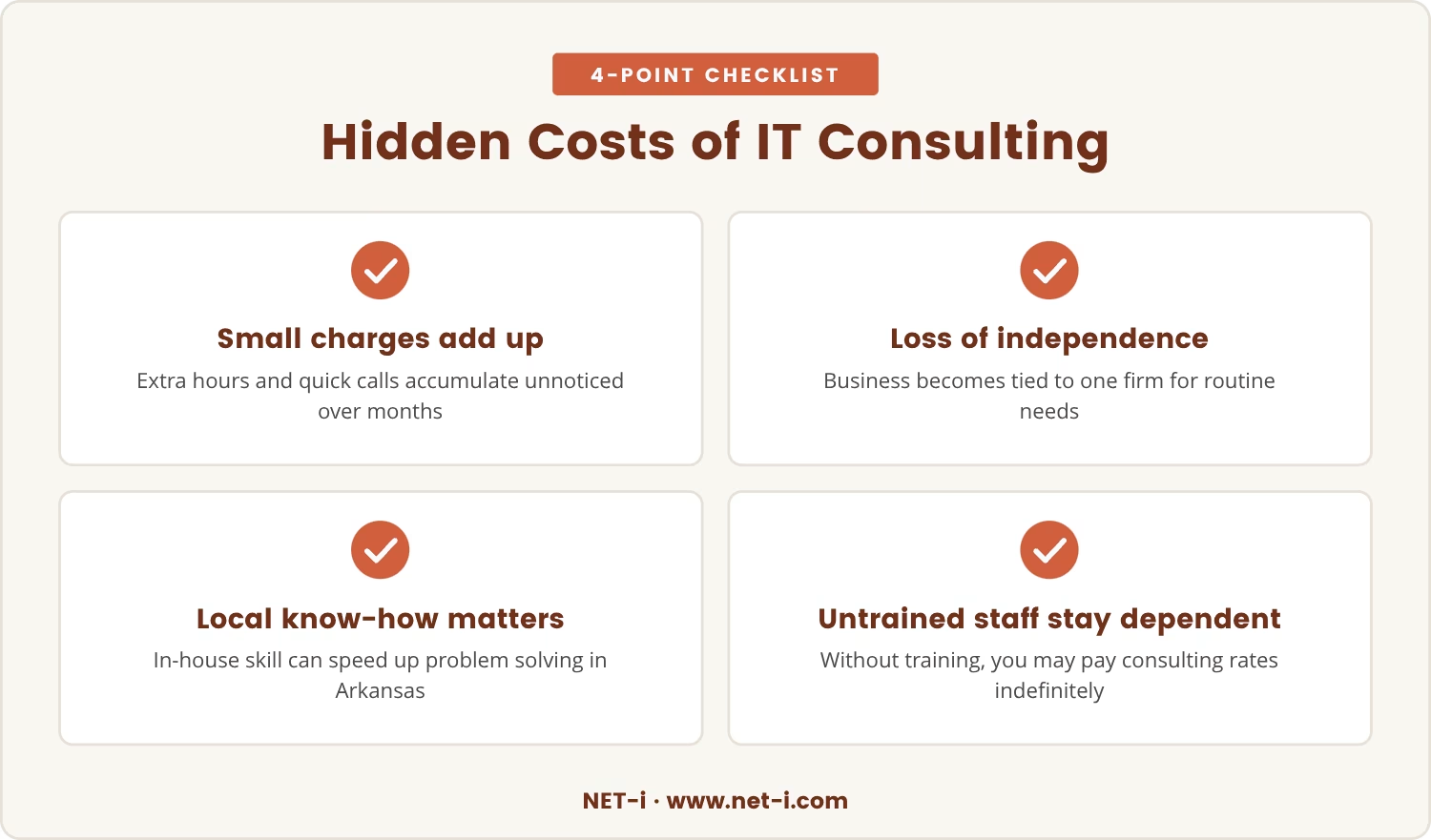
Those charges tend to show up small: an extra hour here, a quick call there. Over months, though, they stack up, and you may not notice right away, especially when the work itself is solid. The real price isn't on the invoice at all — it's the independence you give up, tying your business to one firm for needs that shouldn't require outside help.
That matters even more for a business in Arkansas, where local support and in-house know-how can genuinely change how fast a problem gets solved.
If your team never gets trained to take the reins, you could end up paying consulting rates indefinitely — money that we think is often better spent building your own staff's skills or investing in technology that actually fits what you need.
When consultants run the operation with no plan to bring your team along, the effects don't stop when the project does — they tend to show up for a long while after.
If your staff isn't part of the work, they miss the chance to actually learn the new systems. That leaves them unprepared the day something breaks and no consultant is on the phone.
Watching someone else make every call tends to shrink people's confidence in their own judgment. That hesitation shows up later, right when they finally have to step in and act.
Consultants often keep their own notes rather than handing over anything usable, which leaves your team guessing at how things actually work. That guesswork slows down every future fix.
Without anyone clearly owning a decision, even simple fixes end up waiting on consultant sign-off. That's frustrating for users and it drags on operations that shouldn't need to wait.
Every routine task that gets routed to a consultant comes at their rate, not yours. Add those up over time and the bill runs well past what the original project ever cost.
Staff who feel sidelined tend to look for work where they actually get to contribute, and losing an experienced person sets the whole IT operation back further than it looks at first.
Sliding into long-term dependence on a consulting firm rarely announces itself — it just becomes the routine. A few patterns are worth watching for:
If any of that sounds familiar, it's probably worth rethinking the arrangement before the costs and the risk grow any further.
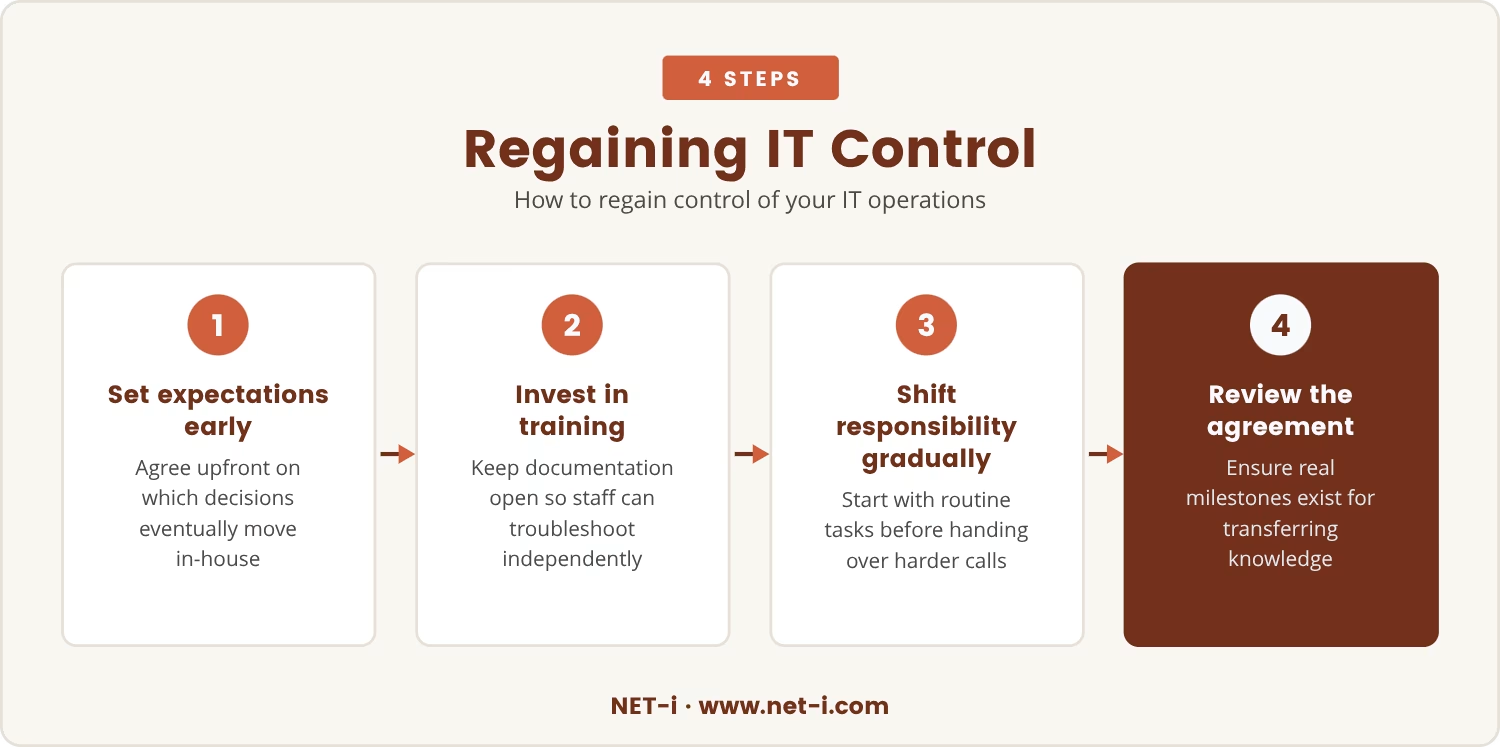
Getting control of your IT operations back starts with a plan, not a complaint. Set expectations with your consulting partner up front about which decisions eventually move in-house, and get your staff involved from day one — even just shadowing at first counts for something.
We're in this to help businesses and the people running them, and honestly, that's the whole point for us, not some line item under the margin. We think that's the reason a plan like this actually works: when the goal is your team standing on its own, the handoff gets built in from the start instead of tacked on when someone finally notices the dependence.
From there, invest in training, keep documentation open so your people can troubleshoot without waiting on a callback, and shift responsibility over gradually — routine stuff first, harder calls once confidence is there. Review the consulting agreement itself too, and make sure it has real milestones for transferring knowledge, not an open-ended arrangement that just keeps renewing itself.
Have you looked at your current setup to see which of those decisions your own team could already be handling?
A sustainable IT operations management strategy comes down to balance — consultants bring real expertise, but the long-term goal has to be your own team's skill and confidence, planned for from the start rather than left to chance.
Start by sorting out which IT tasks are genuinely critical and which ones your staff could handle with some training. Build a roadmap with your consulting partner for handing those off, and check in with your people regularly to see how ready they actually feel to take on more.
Focus on that sustainability, and you cut the risk of ending up permanently tied to outside help. What you get instead is a team that handles the routine work itself, with outside consultants brought in only for the genuinely specialized stuff.

Many businesses with 15 to 70 users find themselves relying on outside consultants for daily IT decisions, often without realizing how it happened.
At NET-i, we help you build a plan that puts your team back in charge. Let’s talk about how we can support your staff’s growth and independence.
Let’s identify which IT decisions your team can start handling and how we can support that transition together.
If your team has to check with consultants before making routine IT calls, or consultants sit in on most day-to-day meetings, that's a sign of dependence. Watch for thin internal documentation, little staff training, and hesitation from your people when an issue lands on their desk.
Bring your staff into every stage of the project, from planning through implementation, with real training and time shadowing the consultants. Set clear milestones for handing off responsibility, keep documentation open, and move routine tasks to your team first, building toward the harder calls as confidence grows.
Holding onto the routine work keeps the engagement going, so it's an easy default when nobody sets different expectations. Without a clear plan for transferring knowledge, it can happen without anyone at the firm even intending it — it's just what happens when the handoff is never spelled out.
Good project management builds the handoff into the plan from the start rather than leaving it as an afterthought. Skip that step and the business tends to lean on consultants longer than it needs to, while clear communication and real milestones keep staff on track to take over when the project wraps.
A management consultant can absolutely introduce your team to new tools and better ways of working. But that only sticks if there's a real plan for training and a gradual handoff — otherwise the expertise stays with the consultant instead of becoming something your own staff actually owns.
%20(1)_11zon.jpg)
A seasoned IT Computer Network Support professional with nearly 30 years of business ownership experience Chris is the leader and managing partner of Net-I.
Fun Fact: Chris thinks he should have been a comedian, unfortunately few others agree with him.

.svg)