Focusing on speed alone can leave your business stuck with recurring tech problems that never get fixed for good, costing more time and money over time.

Measuring IT support by ticket response time can hide deeper problems, as quick replies often mask slow or incomplete fixes. Businesses that focus only on speed risk facing the same issues repeatedly instead of getting lasting solutions.
Most people assume the real risk when a network goes down is how long it takes support to answer the phone. In practice, they mistake a fast reply for an actual fix, which costs a business more.
For a business in Arkansas, that mix-up shows up quickly: your systems stall, your team can't work, and every idle minute chips away at revenue and opportunity.
Many companies judge local IT support by how quickly they respond to tickets. A fast reply feels reassuring; we get it, but it doesn't tell you whether the problem's actually fixed, only that someone picked up the phone.
Sometimes that quick answer just papers over something deeper, and the same issue turns up again later, sometimes worse than before.
A help desk measured mainly on speed ends up rewarding technicians for closing tickets, not for solving what's actually wrong. That's a structural problem more than a people problem, and it can leave a business fighting the same fire over and over instead of putting it out for good.
So the real question isn't how fast your IT support answers. It's whether they resolve things for good.

Most businesses expect their tech support to respond quickly when something breaks, and a fast reply does calm the nerves in the moment.
But response time and resolution are two different things, and treating them as the same is where the trouble starts. A technician can reply in minutes and still leave you with a fix that takes hours or days to land - the reply is visible; the solution is what pays off.
When a help desk is measured mainly on how fast it answers, technicians naturally learn to close tickets quickly instead of digging into what caused them. That habit produces problems that never quite go away; they just get reopened under a new ticket number.
Your business can feel like it's getting great service the whole time this is happening, since every call gets answered fast. Meanwhile, the underlying issue sits there, and over months that pattern costs more in lost productivity than a slightly slower, thorough fix ever would.
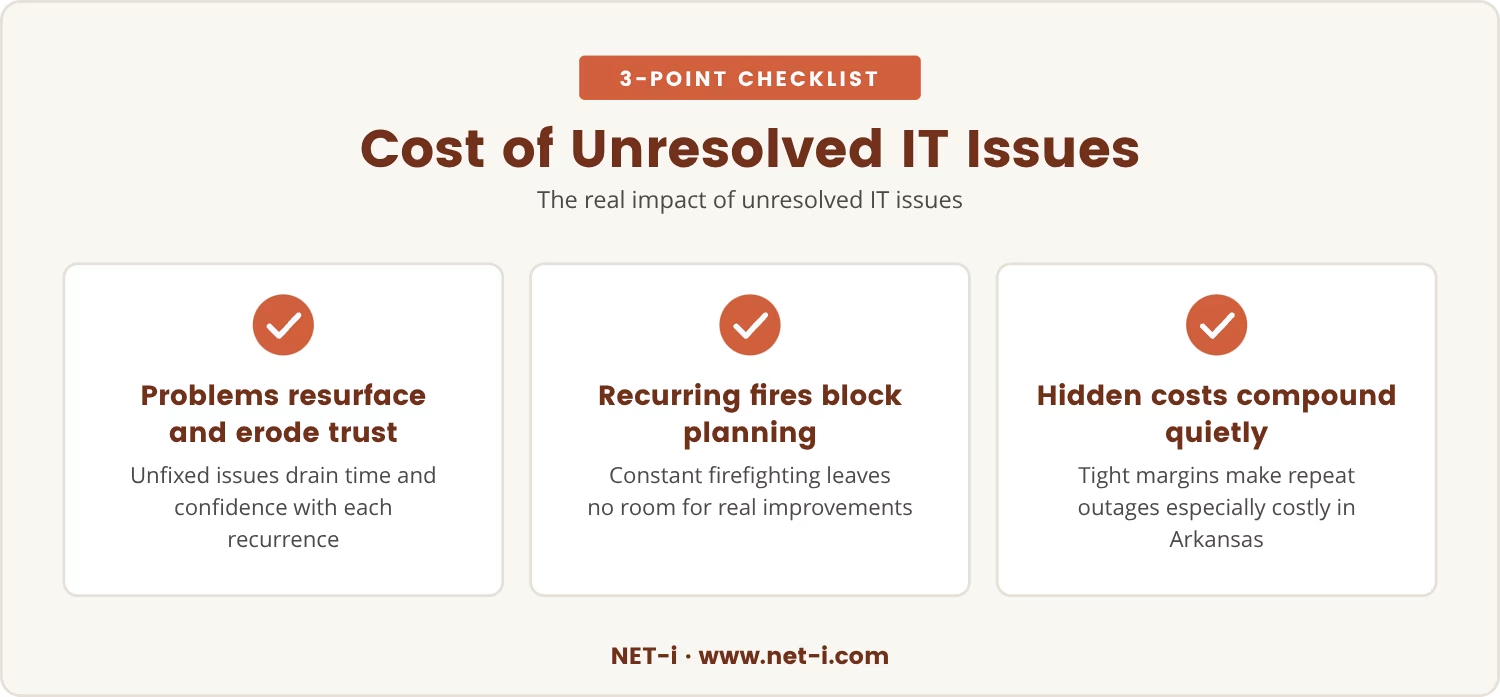
When an IT problem isn't actually fixed, it tends to resurface, and each time it does, your team loses a little more time and a little more confidence in the systems they depend on. That cycle quietly drains resources most owners aren't tracking.
Recurring issues also crowd out planning. A support team constantly re-fighting the same fire has no room left for the upgrades or improvements that would actually move the business forward.
For businesses in Arkansas, where margins get tight and every working hour matters, those hidden costs compound quietly - a quick reply doesn't help much if the same outage interrupts your team again next month.
What actually matters is whether your IT support gets to the root of the problem instead of patching the symptom. Get that right, and disruptions drop along with the noise around them.
Many companies pick local IT support based on how fast the help desk answers the phone, but that's a thin way to judge lasting quality.
A better signal is whether problems actually stay fixed - which means tracking how often the same issue comes back and whether a technician can explain, in plain terms, what caused it and how it was resolved.
Worth asking, too: does your provider try to prevent the next problem, or just answer the one in front of them? Do they offer real guidance on upgrades, backups, or migrations that would make your systems sturdier over time?
Local knowledge matters for businesses in Arkansas, but knowing the area only helps if the provider is also aiming for real fixes rather than fast ones.
When a help desk gets judged mainly on response time, technicians learn - fairly reasonably - to watch the clock instead of the cause, and that shift shows up in a handful of predictable ways.
A support partner that values a thorough fix over a fast one keeps you out of that loop entirely.
Some IT support teams take the extra time to find the actual problem, even when that means a slower first reply, and that trade-off is worth understanding on its own terms.
It feels less responsive in the moment, but it pays off over the following weeks: fewer repeat issues, steadier systems, and a team that isn't bracing for the next interruption.
A partner working this way tends to spot patterns before they become outages, suggest proactive changes ahead of time, and keep things running quietly in the background - which, over time, adds up to fewer emergencies and better productivity.
Not every support service works the same way underneath, even when the ticket experience looks similar on the surface. Here's what tends to separate a help desk built for real solutions from one built for quick replies.
A technician after the real cause will ask about recent changes, exact error messages, and how the problem first showed up. That kind of questioning is itself a sign they're not just aiming to close the ticket.
A quality help desk keeps a record of what's happened before and watches for patterns. When the same issue resurfaces, they treat it as a signal to dig deeper rather than another ticket to close.
Once something's fixed, a good technician tells you what actually went wrong and how it was resolved. That explanation is what lets you avoid tripping over the same problem again.
A team focused on the long run will flag ways to head off the next problem - regular backups, timely software updates, that kind of thing.
After resolving something, they check back to confirm it's holding. That follow-up is the tell: it says they care about the result, not just the reply.
Choosing the right IT support for your business means looking past how fast the phone gets answered. A few questions tend to surface whether a provider is built for lasting fixes.
Asking these upfront tends to separate a provider chasing real results from one chasing fast numbers.
Plenty of businesses in Arkansas lean on local tech support to keep daily operations running, and the right partner changes how smoothly that runs day to day.
If a provider is only chasing ticket speed, you can end up stuck in a loop of the same problem resurfacing. Aim for real fixes instead, and your systems get steadier while your team spends its time on growth instead of troubleshooting the same thing twice.
We think there's something real to being genuinely local here - not just nearby on a map, but staffed by people who can actually get to a site when something's wrong. A technician who shows up in person, accountable to a business they can drive to, tends to follow through in a way that's harder to match from a model built around handling tickets remotely.
That's not a guarantee of anything - it's just how accountability tends to work when the person fixing your network also has to look you in the eye about it.
For companies with 15 to 70 users, that gap matters more than it looks on paper - repeated tech issues cost proportionally more when there's no large in-house team absorbing the slack. Reliable, close-by support means fewer disruptions and more hours spent on the work that actually grows the business.
Choosing local IT support on response time alone tends to produce a pattern of problems that never fully go away. Speed helps, sure, but it should never come at the cost of an actual fix.
We're pretty direct about this: a support service willing to slow down enough to troubleshoot properly saves a business more, over time, than one optimized to close tickets fast. Thoroughness beats quick wins almost every time we've thought it through, and it's the standard worth holding any provider to.

Many companies with 15 to 70 users find themselves frustrated when tech issues keep coming back, even though their IT support responds quickly. At NET-i, we understand how disruptive this can be for your team and your business.
If you want to see how we focus on solving the real cause of your IT problems—not just replying fast—let’s talk about your current setup and what lasting results could look like.
Let us help you review your current support process and see if your recurring problems are being fully addressed.
Watch whether the same issue keeps resurfacing and whether your technician can explain, plainly, what caused it and how it was fixed. Vague answers or repeat tickets on the same problem are the clearest warning signs.
A proactive provider monitors your systems, flags needed updates, and works to head off problems before they hit. That often includes backup planning or migration guidance to keep your data safe and your systems current.
Outsourcing can open up broader expertise and quicker response, especially for a business without a full IT team of its own. What matters most is picking a partner focused on real fixes rather than fast replies.
A skilled technician asks detailed questions, checks system history, and looks for patterns across past incidents. That process is what lets them resolve the actual problem instead of just the symptom in front of them.
Start by tracking which problems keep resurfacing and how they've been handled each time. Bring that record to your support provider and ask for a plan that addresses the root cause, not another quick patch.
%20(1)_11zon.jpg)
A seasoned IT Computer Network Support professional with nearly 30 years of business ownership experience Chris is the leader and managing partner of Net-I.
Fun Fact: Chris thinks he should have been a comedian, unfortunately few others agree with him.

.svg)